Video editing for beginners can seem difficult at first, but learning the basics can make the process much easier. From cutting and arranging clips to adding music, transitions, text, and effects, video editing helps turn raw footage into engaging content. Whether you want to create YouTube videos, Instagram Reels, promotional videos, or personal projects, understanding the basic editing techniques and choosing the right software can help you get started. With regular practice and creativity, beginners can gradually improve their video editing skills.
Understanding The Basics?
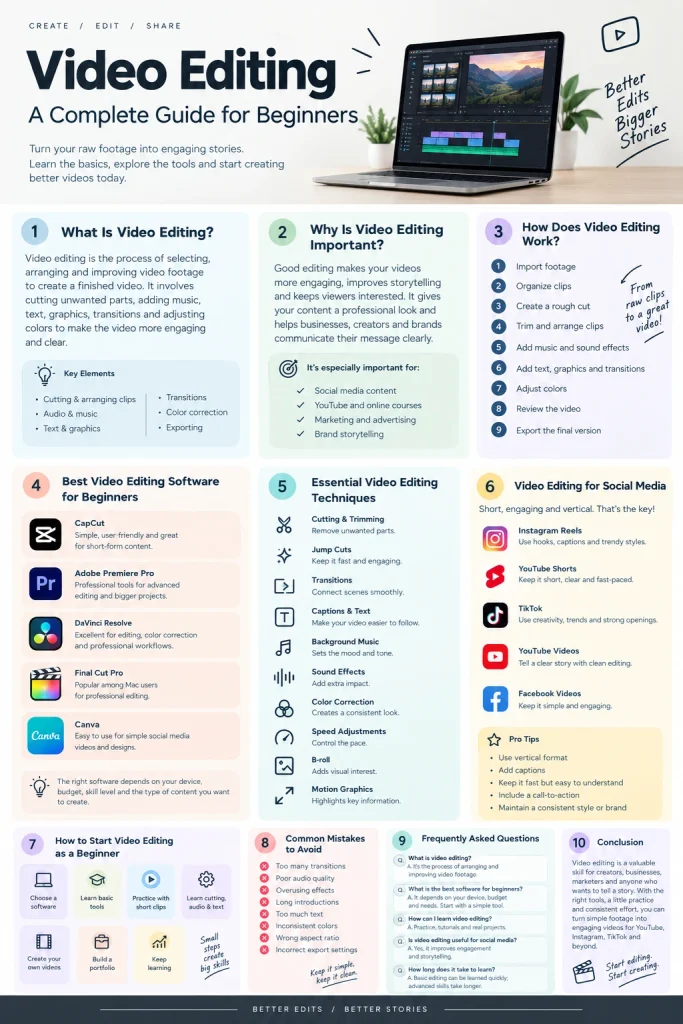
Video editing is the process of selecting, arranging, cutting, and improving video footage to create a finished video. It involves removing unwanted sections, arranging clips in the correct order, adding music and sound effects, and improving the overall visual presentation.
Modern video editing can also include captions, graphics, animations, transitions, color correction, and visual effects. The editing process depends on the type of video being created. A short social media Reel may require quick cuts and captions, while a YouTube video may require detailed storytelling and audio adjustments.
For beginners, understanding basic techniques is a good starting point before moving on to advanced effects and professional workflows.
Why Is it Important?
The importance of video editing goes beyond simply making a video look attractive. Good editing helps communicate a message clearly and keeps viewers interested.
One major benefit of professional video editing is improved storytelling. By selecting the right clips and arranging them effectively, editors can create a logical flow that makes the content easier to understand.
Video editing can also improve the quality of social media content. Captions, music, transitions, and engaging openings can make videos more suitable for platforms where users quickly scroll through content.
For businesses, video editing for social media can help present products, services, advertisements, tutorials, and brand stories in an engaging format. Well-edited videos can also create a more consistent and professional brand image.
How Does Video Editing Work?
The video editing process usually follows several basic steps.
First, the editor imports and organizes the raw footage. Keeping clips organized makes it easier to find the right shots during editing.
Next, unwanted footage is removed and the best clips are arranged into a rough sequence. This is followed by more detailed cutting and trimming to improve the video’s pacing.
After the main video is assembled, the editor can add background music, sound effects, captions, graphics, and transitions. Color correction can then be used to create a consistent visual appearance.
Finally, the complete video is reviewed for mistakes and exported in a suitable format for its intended platform.
Best Video Editing Software for Beginners
Choosing the right video editing software depends on your device, experience, budget, and the type of content you want to create.
CapCut is popular for short-form videos and social media content. Its straightforward tools make it useful for beginners who want to create Reels and Shorts.
Adobe Premiere Pro is widely used for professional video editing and offers advanced tools for detailed projects.
DaVinci Resolve combines video editing with powerful color correction and other professional features. It can be suitable for people who want to develop more advanced editing skills.
Final Cut Pro is designed for Mac users and provides a professional editing workflow.
Canva offers simple video editing features that can be useful for beginners creating social media content, presentations, and promotional videos.
There is no single best software for everyone. The right choice depends on your specific needs and skill level.
Essential Video Editing Techniqueshttps://www.capcut.com/resource/capcut-tutorial-for-beginnershttps://www.canva.com/video-editor/https://www.adobe.com/in/education/students/premiere-pro.html?
Learning a few fundamental video editing techniques can make a significant difference in the quality of your content.
Cutting and trimming help remove unnecessary footage and keep the video focused. Jump cuts can make talking-head videos faster and more engaging when used appropriately.
Transitions can connect scenes, but they should be used carefully rather than added to every cut. Captions and text can help viewers understand important information, particularly when watching videos without sound.
Background music and sound effects can improve the atmosphere and support the story. Color correction helps create consistency between different clips.
Other useful techniques include adjusting video speed, adding B-roll, and using basic motion graphics. These video editing tips can help beginners create cleaner and more engaging videos without relying on excessive effects.
Creating Engaging Social Media Videos for Social Media
Video editing for social media requires a different approach from traditional long-form video editing. Platforms such as Instagram, YouTube, TikTok, and Facebook are highly focused on short and engaging content.
A strong opening or hook can help capture attention quickly. Vertical formats are commonly used for short-form content, while captions can make videos easier to follow.
Editors should also pay attention to pacing. Videos should move at a speed that keeps the viewer interested without becoming difficult to understand.
Brand elements such as logos, fonts, and consistent visual styles can also be included when creating content for businesses. A clear call-to-action at the end can encourage viewers to visit a website, follow an account, or learn more about a product or service.
How to Start as a Beginner
How can beginners learn video editing? The best approach is to start with one editing program and learn its basic tools instead of trying to master several applications at once.
Begin by learning how to import, cut, trim, and arrange clips. Then practice adding music, captions, transitions, and basic color adjustments.
Creating small projects is one of the best ways to develop its skills. You can edit short videos from your own footage and gradually experiment with different styles.
As your skills improve, create several projects for a portfolio. A portfolio can demonstrate your editing ability to potential clients, businesses, or employers.
Most importantly, practice consistently and learn from each project.
Common Video Editing Mistakes to Avoidhttps://feedly.com/i/top/video-editing-blogshttps://www.adobe.com/in/products/firefly/discover/learn-video-editing-beginners-guide.html
Beginners often make a few common mistakes. Using too many transitions and visual effects can distract viewers from the main message.
Poor audio quality can also reduce the overall quality of a video, even when the visuals are good. Extremely long introductions can cause viewers to lose interest, while excessive text can make videos difficult to watch.
Other mistakes include inconsistent colors, poor pacing, incorrect aspect ratios, and exporting videos with unsuitable quality settings.
Simple, clean editing is often more effective than adding unnecessary effects.
Frequently Asked Questions About Video Editing
What is video editing?
Video editing is the process of arranging and improving video footage to create a finished video. It can include cutting clips, adding audio, captions, graphics, transitions, and color adjustments.
What is the best software for beginners?
The best software depends on your device, budget, experience, and editing requirements. Beginners can start with simpler tools before moving to more advanced professional software.
How can I learn video editing?
You can learn by choosing one editing program, studying its basic tools, practicing with short projects, and gradually learning more advanced techniques.
Is video editing useful for social media?
How long does it take to learn video editing?
Basic video editing can be learned through regular practice, while advanced skills take longer to develop. The learning time depends on the software, complexity of projects, and consistency of practice.
Conclusion
Video editing is a valuable creative and digital skill for beginners, creators, businesses, and marketers. From simple cuts and captions to advanced color correction and motion graphics, editing can transform raw footage into engaging content. Choosing the right software, learning the fundamentals, and practicing consistently are important steps toward improving your skills. Whether your goal is to create YouTube videos, social media content, advertisements, or personal projects, learning video editing can help you communicate ideas more effectively and professionally.